Patents are easy to misread. From the outside, they look like paperwork, another line item on a press release. From the inside, they're more akin to a map of where a company has actually been willing to plant a flag and defend it.
We just received our tenth issued U.S. patent. Before we get into what that means for the Arrive Point™ and for the people watching Arrive AI (NASDAQ: ARAI) right now, it's worth focusing on the question most readers don't get asked directly:
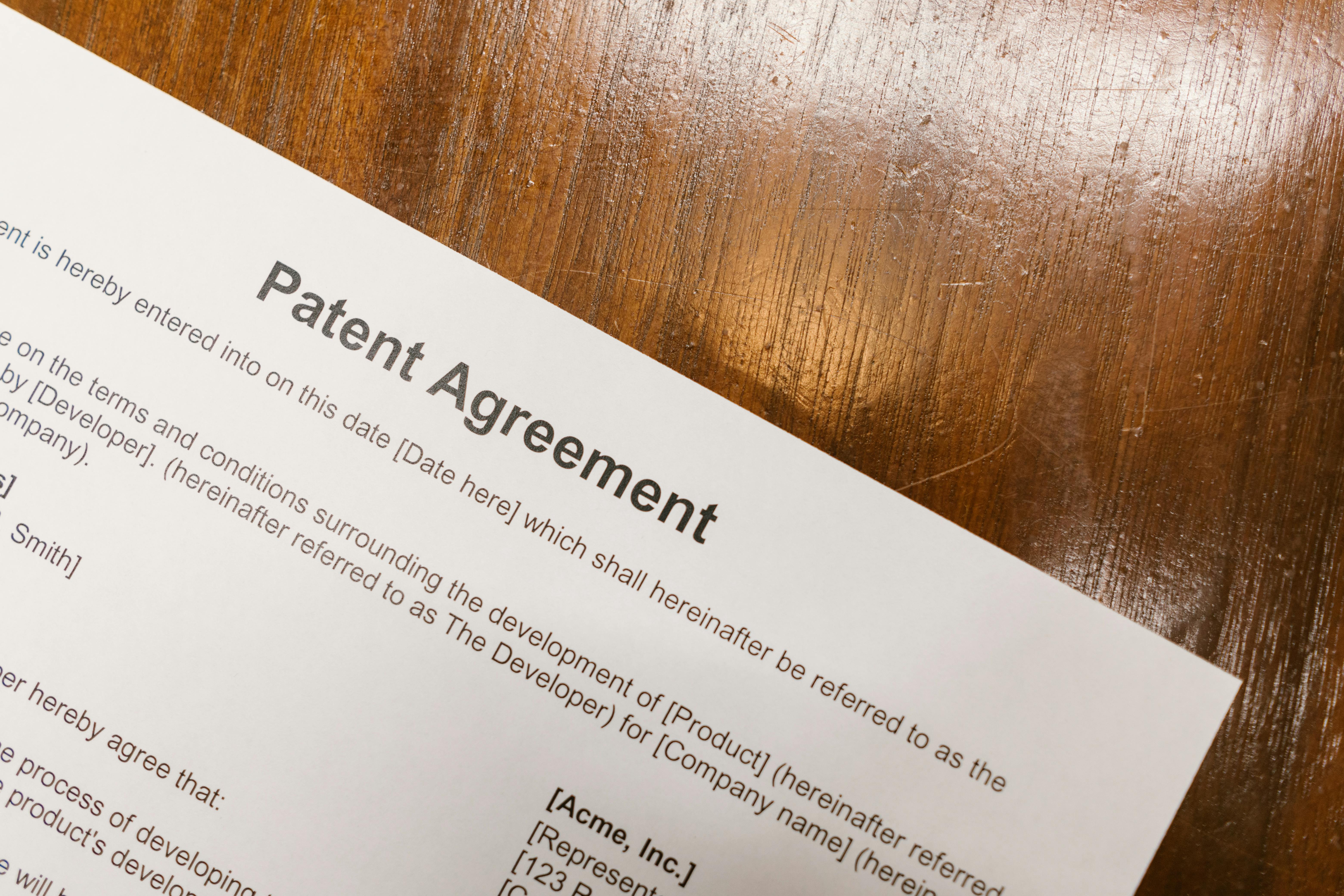
A patent is a time-limited monopoly and a core part of a company’s intellectual property (IP) strategy and contributes to the foundation of a defensible portfolio. The government, for the US or the specific country in which you have the invention approved, grants you the right to stop other people from making, using, or selling a specific invention for roughly twenty years, in exchange for publishing exactly how it works. That trade is the whole point. You give up secrecy (i.e. disclose your idea) to get defensibility (i.e. the right to prevent with an infringement action or license if commercially desired).
For a tech company like Arrive AI that’s defining a new category in autonomous delivery, patents do four things at once.
1. They define the product
A patent forces you to describe your invention in language precise enough that a court could enforce it. That exercise, painful as it is, sharpens product thinking.
2. They blunt the competition before they show up
When an industry or new technology attracts attention, well-funded entrants will move fast. A patent doesn't stop them from competing, but it forces them to either try to design around your invention(slower, more expensive, often less effective) or come to the table and license what you've built. A patent can become an asset that generates revenue directly through licensing deals, cross-licensing arrangements, or, in some cases, settlements.
3. They create leverage in partnerships
Holding a patent changes the power dynamic in any integration conversation. Beyond evaluating whether your product works, potential partners are evaluating whether the underlying technology is yours to offer in the first place. That answer can shape everything from contract terms to how much of their roadmap they're willing to build with your product. For us, that shows upmost clearly with drone operators and hospital systems weighing an integration with the Arrive Point™ Network. "We hold the patent on this" can help shift the conversation from a vendor pitch to an infrastructure decision.
4. They signal seriousness to investors
Patents are expensive, slow, and adversarial. Companies that hold real ones have usually survived a level of scrutiny that pitch decks don't reveal.
That second point isn't theoretical for us. As John Ritchison, our Patent Attorney and Corporate Counsel, puts it:
"There's going to be a lot of people out there trying to copycat. And when those folks need the license, we're going to be available to sell those licenses to other makers and manufacturers and generate more revenue for our shareholders."
That's the approach. We expect imitators. We've built a strong portfolio so that when they arrive, the conversation starts with a license agreement or a cease-and-desist letter.
Dan O'Toole filed the first patent in Arrive AI’s portfolio in 2014. That was before Amazon Prime Air had a working prototype and before USPS had publicly weighed in on drone delivery. The bet wasn't on drones themselves. It was on the handoff: the moment a package transfers from anautonomous vehicle to a human, and the safe and secure endpoint that has toexist for that moment to work without a person standing there. This is one ofthe most overlooked challenges in last-mile delivery and autonomous deliverysystems.
That's the common thread running through all ten patents in our autonomous delivery patent portfolio, which are far from being scattered, unrelated ideas. They cover the docking mechanics, the tethering systems, the climate-assisted compartments for sensitive cargo, and now, with the tenth, shared-use endpoints for multi-tenant buildings for residents or businesses.

Our new patent for shared use, U.S. Patent No. 12,591,840, matters because it solves a key scalability problem facing current unattended delivery systems that directly affects future residential Arrive Point users. A single-family home with an Arrive Point is straightforward. An apartment building with 200 units or a hospital with multiple points of use is not. Who has access to which compartment? How does a courier authenticate? How does the building manage chain of custody across hundreds of residents or hospital personnel and dozens of carriers a day? The shared-use patent gives us the legal and technical foundation to deploy multi-use Arrive Points that will enable communities or businesses like hospitals to enjoy the benefits of secure, unattended deliveries.
Every patent we hold shapes what the Arrive Point™ can do, and just as importantly, what competitors can't easily copy.

Our patent portfolio is what allows us to say, accurately, that we're not a drone company or a robotics company. The Arrive Point Network coordinates the physical delivery endpoints. Arrive AI is the layer between package couriers and the end user. We are the secure point of arrival or departure and communication with the consumer. The patents are the reason that layer is ours to define.
Just as the internet requires servers and cloud platforms, autonomous delivery requires a secure delivery network to unlock its full potential. Servers weren't the exciting part of the early internet. But they turned out to be the part that mattered.
If you're an investor sizing up ARAI or a logistics company evaluating how Arrive AI could help you scale, ten issued U.S. patents, filings in more than 20 countries, and dozens more pending are signals that we are focused on sustainable growth. They tell you the company has been building defensible territory for over a decade, not pivoting toward whatever this quarter's narrative happens to be.
The influx of new personnel with engineers and scientists from all over the US and the world is already impacting our IP in a very positive manner. Additional features and functions, more robust control and communication, as well as design for manufacturing and long-term product and system reliability have been standardized throughout our organization.
If you're a business reader trying to understand where autonomous delivery goes from here, the patents tell you something else. The hard problem in this space was never the flying or the rolling. It was the handoff — the last inch. It's a critical breaking point that delivery automation chains are experiencing.
The breaking point occurs when a robot arrives at a door and there's no one there to receive what it's carrying. That's the problem we've been building our patent portfolio around and systematically solving for eleven years.
And if you're already following Arrive AI, the tenth patent is a marker, not a finish line. We have four more pending in the U.S. alone. The portfolio is still growing because the category is evolving.
We'd encourage you to not take our word for any of this. The full portfolio, including links to each issued patent on Google Patents, lives at arriveai.com/intellectual-property.
If you're an investor, our IR materials are at arriveai.com/investor-relations.
And if you want to talk to us directly about a deployment, a partnership, or a question this post didn't answer, arriveai.com/contact is the fastest way to reach us.