For years, autonomous delivery got talked about like a cool idea that was still a long way off. People liked the concept. Fewer people thought it was close to real.
That's changing. Robots and drones are showing up in real deployments now, not just demo videos. The question isn't "can this work" anymore. It's "how do we build it at scale."
We've believed this shift was coming for a while. Here's what's actually driving it.
Most people picture a robot or a drone when they think about autonomous delivery. That's the visible part. It's not the hard part.
The hard part is what happens on the ground when the robot or drone arrives. Where does the package go? Who or what receives it? What happens if nobody's there?
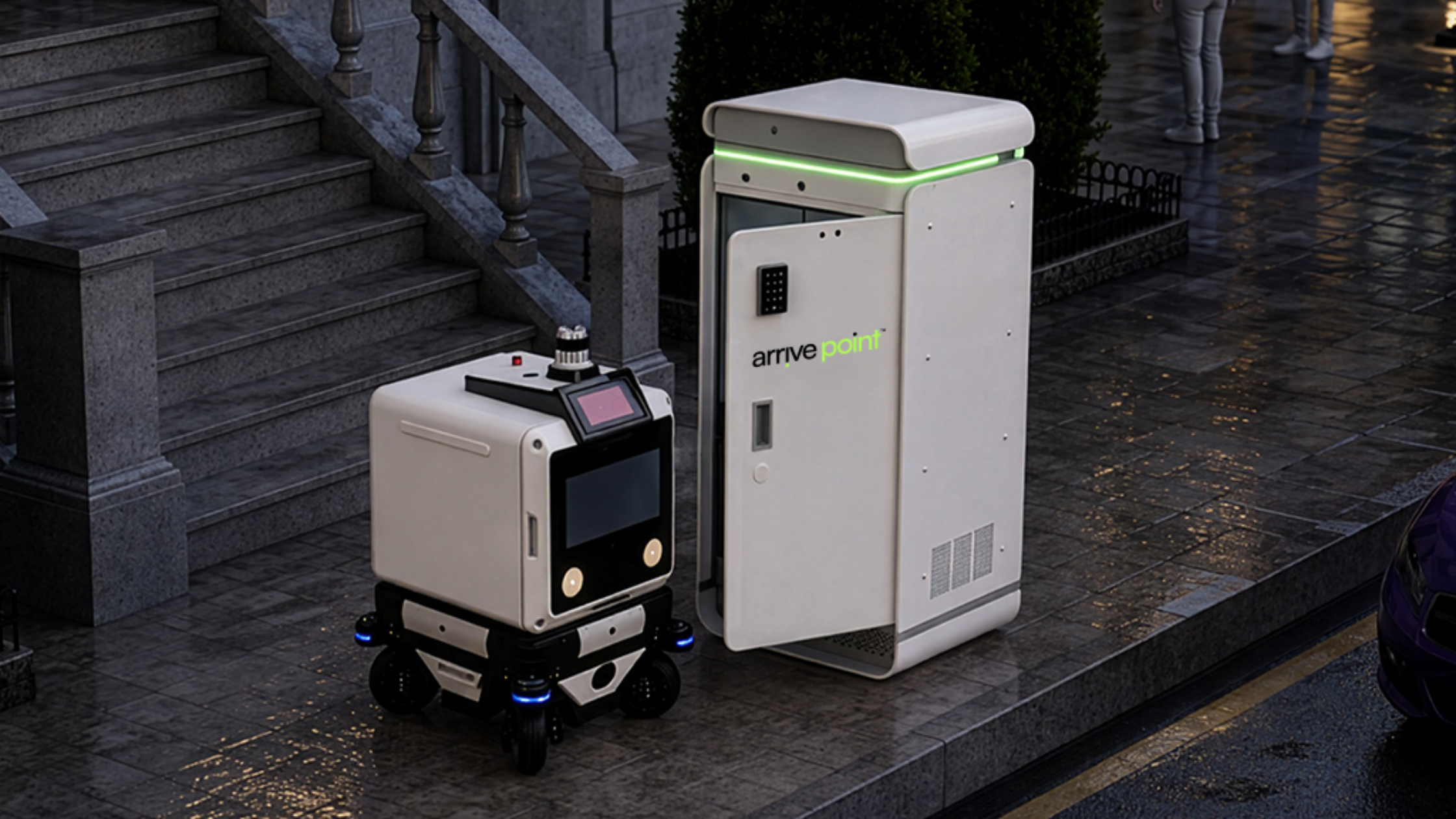
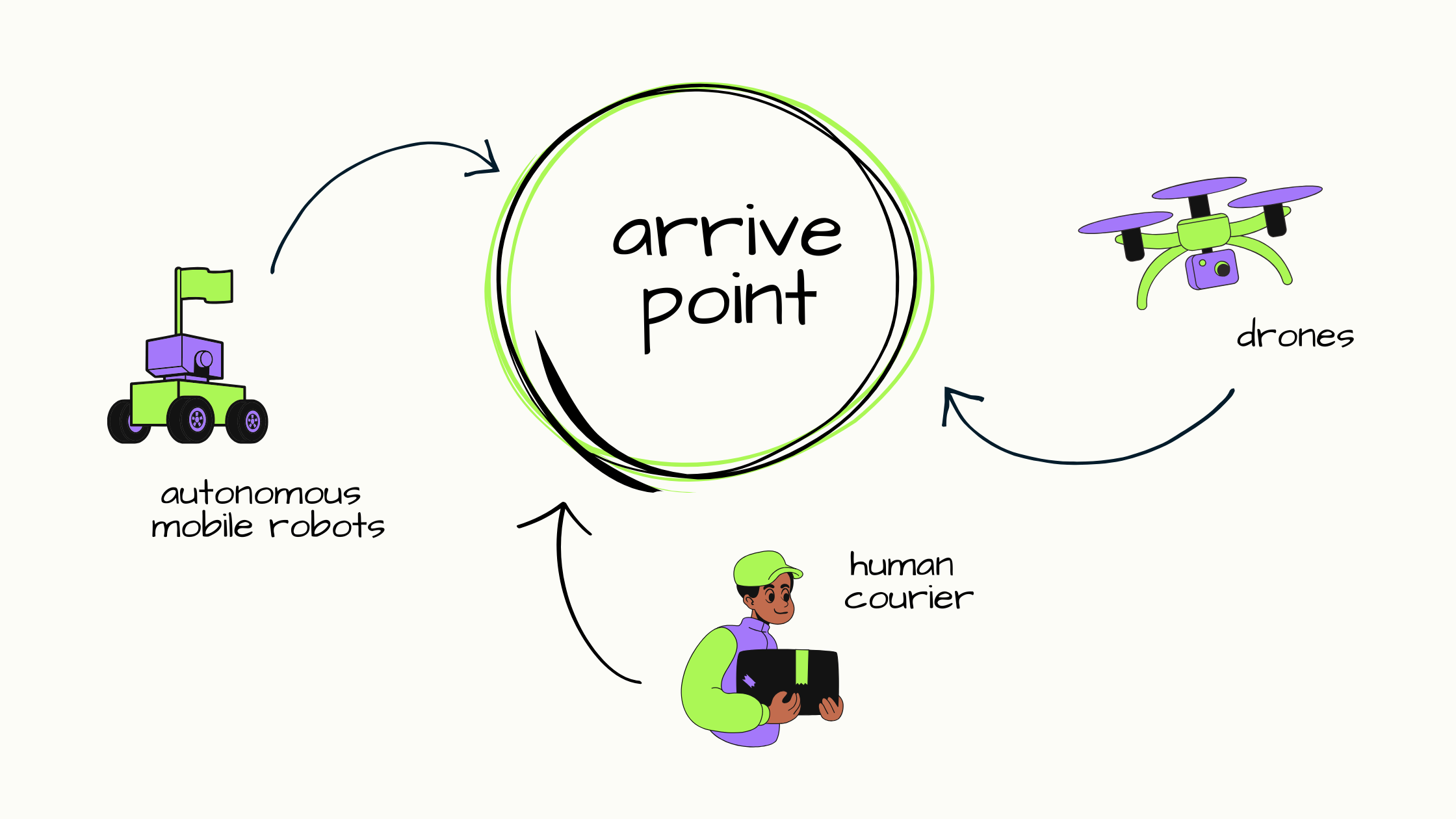
That's the gap Arrive Points close. Think of it less like a smart mailbox and more like a charging station for delivery: a secure, climate-controlled endpoint that a robot, drone, or human courier can hand a package off to and then move on, without waiting around for a person to show up.
We call that asynchronous handoff. It's a small phrase for a big deal. It means the delivery system doesn't grind to a halt if timing doesn't line up perfectly, which is the thing that breaks most delivery pilots in the real world.
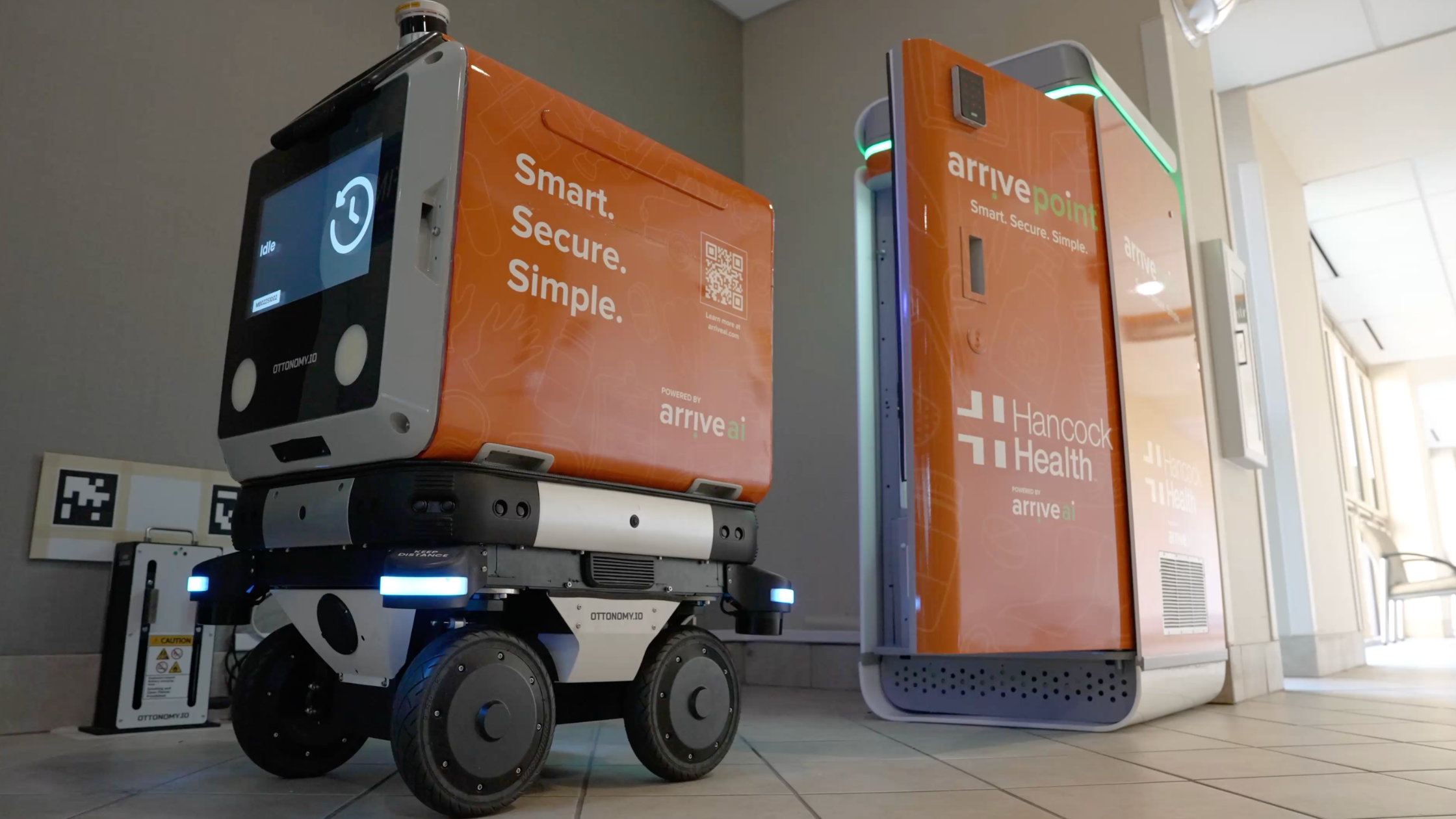
At Hancock Regional Hospital in Greenfield, Indiana, we have two Arrive Points and a ground robot running live deliveries between the lab, the cancer center, and hospital staff. It's the world's first fully asynchronous robotic delivery system running in a healthcare setting.
Healthcare is about as unforgiving an environment as you can pick for a first deployment. Time matters. Handoffs matter. If the infrastructure doesn't hold up there, it doesn't hold up anywhere.
The broader industry is starting to consolidate around the same idea: hardware by itself isn't the product. Companies that used to sell a robot or a drone as a standalone product are now looking to plug into bigger networks instead of standing alone.
That's the direction we built toward from day one. Arrive Points aren't tied to one robot maker or one drone maker. They're built to be the layer that connects to any of them, the last inch of the last mile, regardless of what shows up to make the delivery.
Building ahead of a market means spending years on something before most people understand why it matters. That part hasn't been easy. But it also means that when demand catches up, and it's starting to, we're not scrambling to build the infrastructure. It's already running.
That's where we think autonomous delivery is headed: fewer isolated robots, more connected systems that actually work when a package needs to move from point A to point B without a person babysitting the handoff.
Go deeper into the shift from autonomous delivery as an idea to autonomous delivery as real-world infrastructure, and what it will take to scale these systems beyond individual robots and drones.
Watch it here: The Dan Show - Autonomous Delivery is Accelerating
Subscribe to The Dan Show on YouTube to stay current as new developments happen at Arrive AI.