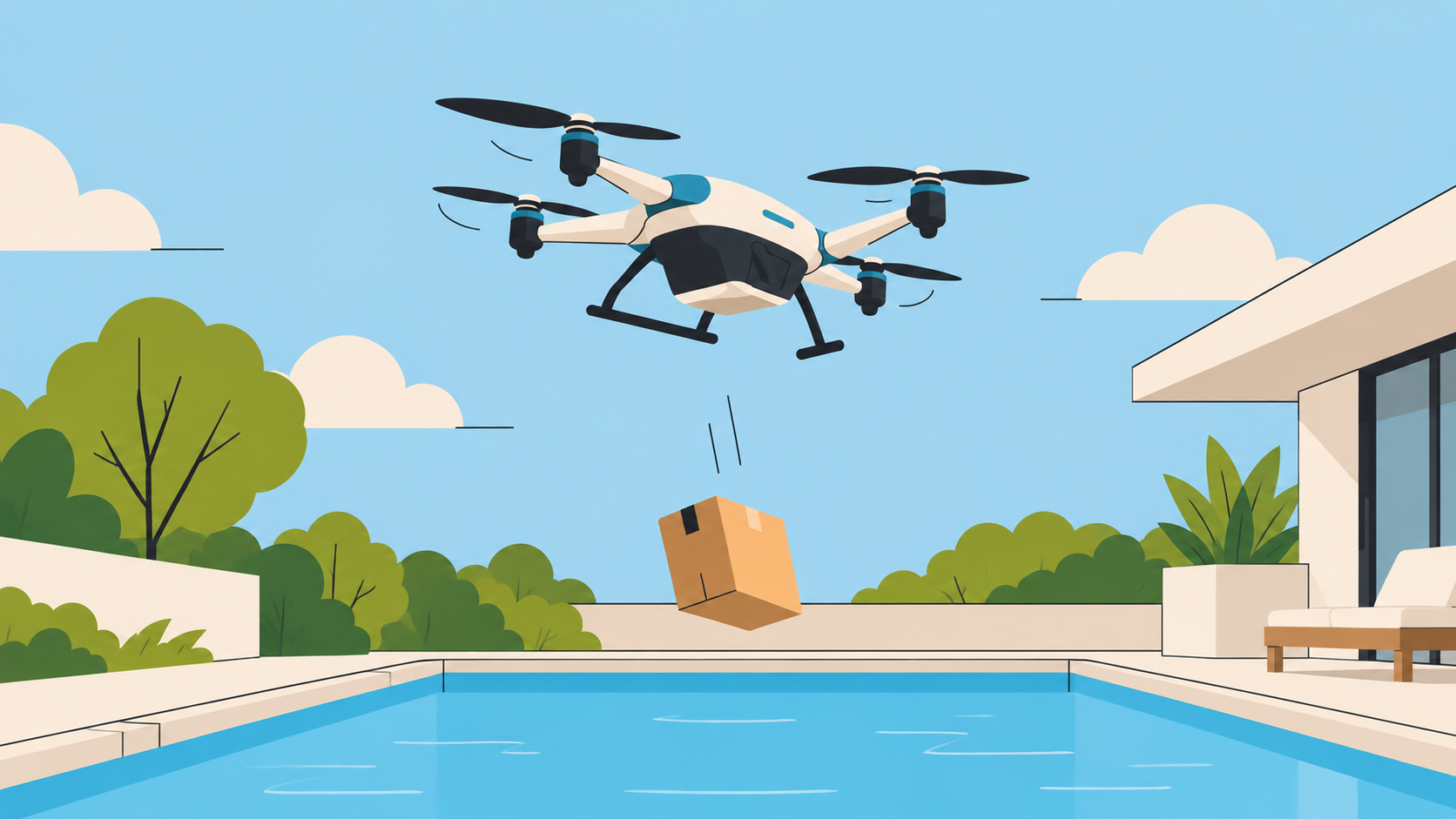
Drone delivery is no longer just a concept for the future. For some customers, it is already a convenient way to receive everyday purchases without making a trip to the store.
In a Business Insider article, an Amazon customer described receiving more than a dozen drone deliveries. She enjoys the convenience and novelty of the service, especially when ordering smaller items.
One of her first orders was a package of clarinet reeds for her daughter. She chose them partly because they were not particularly fragile and were unlikely to break if dropped from a height.
It was a practical choice. But it also raises a question worth considering as autonomous delivery expands: What happens when a package contains something more fragile?
The same article described another delivery that highlighted this challenge. During an experiment with a bottle of drink syrup, the package landed on the edge of a concrete patio, and the impact cracked the lid.
The article did not report that the bottle itself broke. Still, the experience illustrates an important consideration: the conditions at the destination can affect the delivery outcome.
A drone may navigate its route and reach the correct address, but the package still has to land somewhere suitable. The surface, placement of the drop-off point, and type of item being delivered can all matter.
This doesn’t mean drone delivery is inherently unreliable. The customer described many positive experiences with the service. Rather, it shows that successful delivery involves more than getting a package through the air.
As drone delivery becomes more common, the industry needs to consider not only how packages travel, but also how they arrive, remain protected, and reach their recipients.
Discussions about drone delivery often focus on flight capabilities: speed, range, payload capacity, and navigation. These are essential to making autonomous delivery work.
But the final moments of a delivery deserve attention as well.
Where does the package land? Is the drop-off area appropriate for the item? Can the recipient retrieve the package safely and conveniently? What happens if the recipient isn’t available when the drone arrives?
These questions become even more important in environments such as healthcare, where deliveries may involve medical supplies, time-sensitive materials, or workflows that require accountability and secure access.
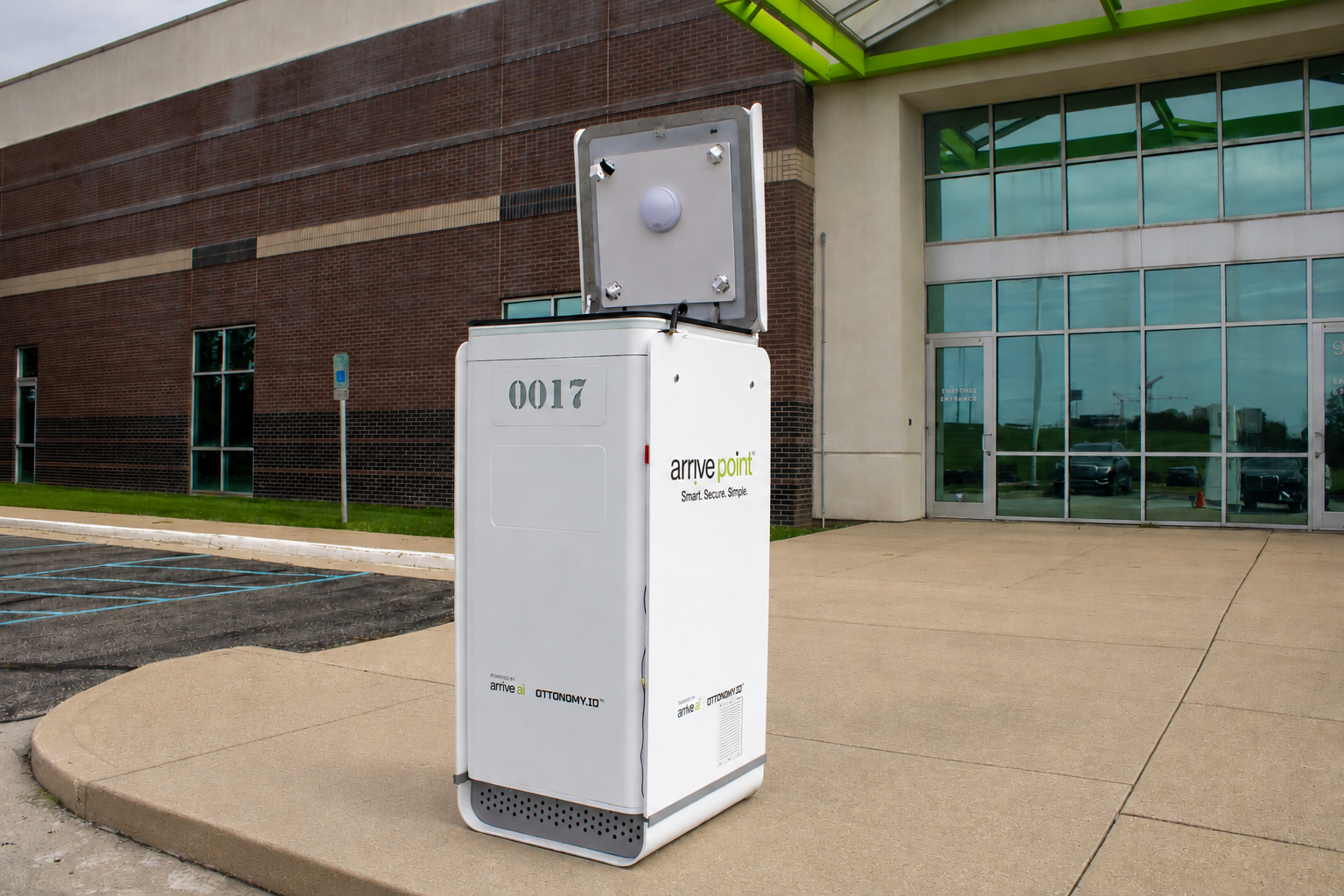
The challenge isn’t simply reaching the destination. It’s making sure the delivery can be completed in a way that fits the needs of the recipient and the environment.
At Arrive AI, we believe autonomous delivery requires more than capable drones and robots. It also needs infrastructure that supports what happens after a delivery reaches its destination.
Arrive Points™ are secure delivery endpoints designed to support authenticated access, monitoring, and documented chain of custody. They provide a defined place for deliveries to be deposited and retrieved, helping reduce dependence on someone being physically present for every handoff.
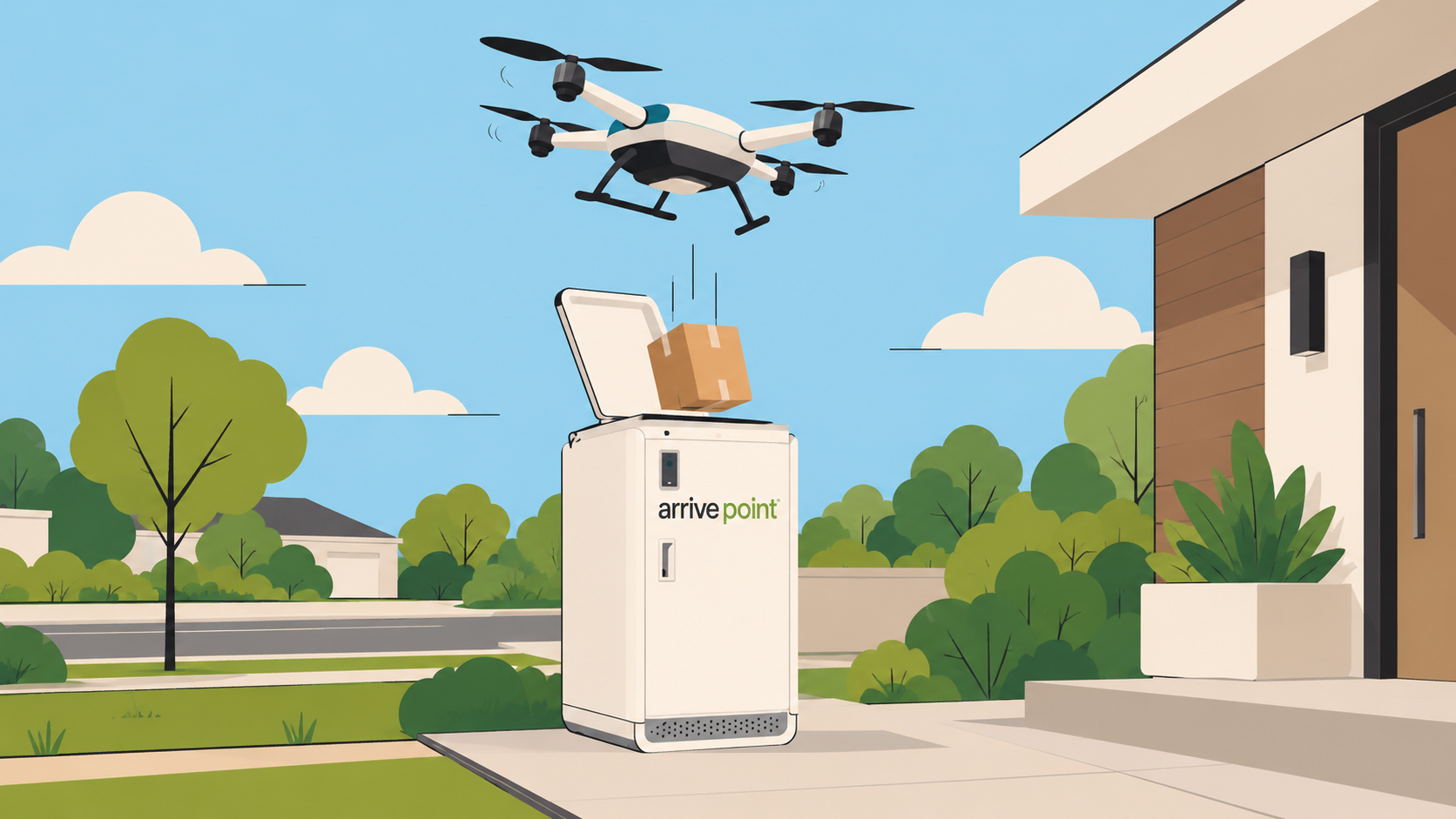
This matters in environments where secure access and reliable delivery workflows are important. A delivery endpoint can help make the destination an intentional part of the system, rather than leaving the final handoff entirely dependent on the circumstances at the drop-off location.
The aircraft and the endpoint serve different purposes. The drone transports the package, while the endpoint helps manage the delivery after arrival. Together, they can form part of a more complete autonomous delivery workflow.
Infrastructure isn’t a substitute for appropriate packaging, safe landing procedures, or choosing the right delivery method for a particular item. Those considerations remain important. But designing for the full delivery process can help address challenges that flight technology alone cannot solve.
The appeal of drone delivery is easy to understand. It can save time, reduce unnecessary trips, and offer new ways to move goods.
But no single delivery method is ideal for every item or environment. Package size, weight, fragility, drop-off conditions, and retrieval requirements all influence whether a particular delivery method makes sense.
The opportunity isn’t simply to make drones faster or expand their range. It’s to build systems that account for the entire journey, from departure to arrival and retrieval.
That means thinking about the aircraft, the package, the delivery endpoint, and the recipient as connected parts of the same process.
The customer experience described by Business Insider offers a useful perspective on both the promise and practical limitations of drone delivery. The service can be convenient and enjoyable, while the condition of the package and the landing environment still matter.
As autonomous delivery expands, the industry has an opportunity to look beyond the flight itself and give greater attention to what happens at the destination.
At Arrive AI, we’re focused on building infrastructure that helps autonomous systems complete deliveries through secure, organized, and accountable handoffs.
Because getting a package to its destination is an important achievement. Making sure the delivery process works beyond that point is what helps make the system complete.
Explore how Arrive AI is developing secure delivery endpoints for autonomous delivery systems.
Learn more about Arrive Points™: https://www.arriveai.com/solution


