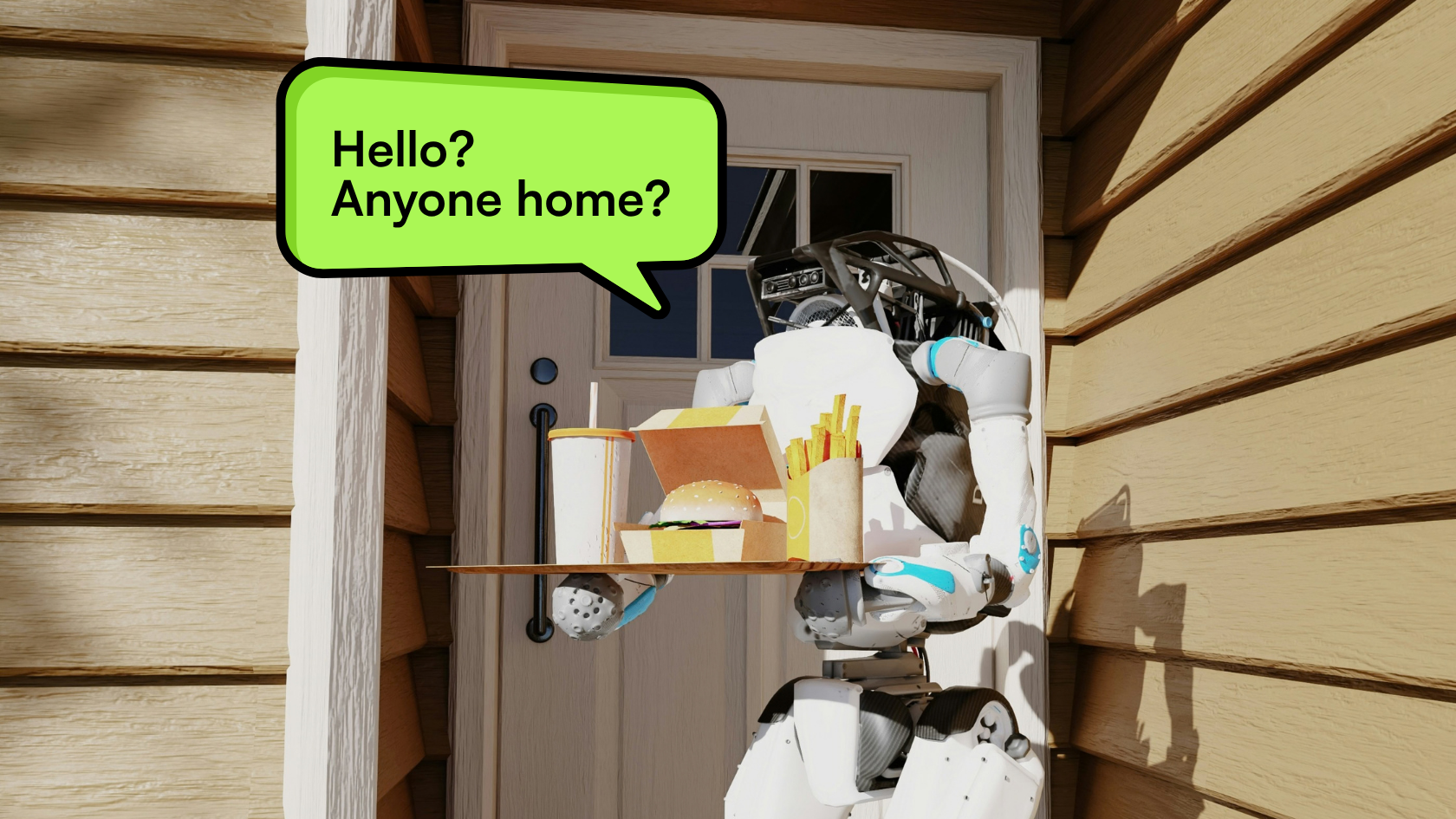
Delivery has gotten smarter.
Robots can navigate on their own. Drones can move goods through the air. New delivery systems are being designed to move packages faster and with less human involvement.
But there is still a surprisingly simple problem at the end of the journey:
What happens when the delivery arrives and you're not there?
That question points to a larger challenge for the future of delivery. Getting a package from one place to another is only part of the process. The system also needs a reliable way to complete the final handoff.
For smart delivery to really work around people's lives, it can't always depend on people being available at exactly the right moment.
Think about a typical home delivery.
A package makes its way through the network, reaches your neighborhood, and arrives at your door.
But if you're at work, running errands, or simply away from home, the delivery has reached its destination without actually completing the journey.
The same challenge becomes even more important as robots and drones become part of the delivery ecosystem.
An autonomous system can handle the trip without a driver or pilot, but it still needs somewhere to safely leave the package.
Without that infrastructure, the last step can bring the entire process back to a very traditional model:
Wait for someone.
Come back later.
Or leave the package exposed.
That's not necessarily a problem with the robot or drone.
It's a problem with the handoff.
There's a natural tendency to focus on the most visible part of delivery technology.
The robot.
The drone.
The vehicle.
But the machine getting to the destination isn't the end of the process.
The package still has to move from the delivery system into the hands or secure possession of the recipient.
That's the moment when the physical infrastructure matters.
An Arrive Point™ provides a secure place for that exchange to happen. Delivery systems can interact with the endpoint, complete the handoff, and continue on their way.
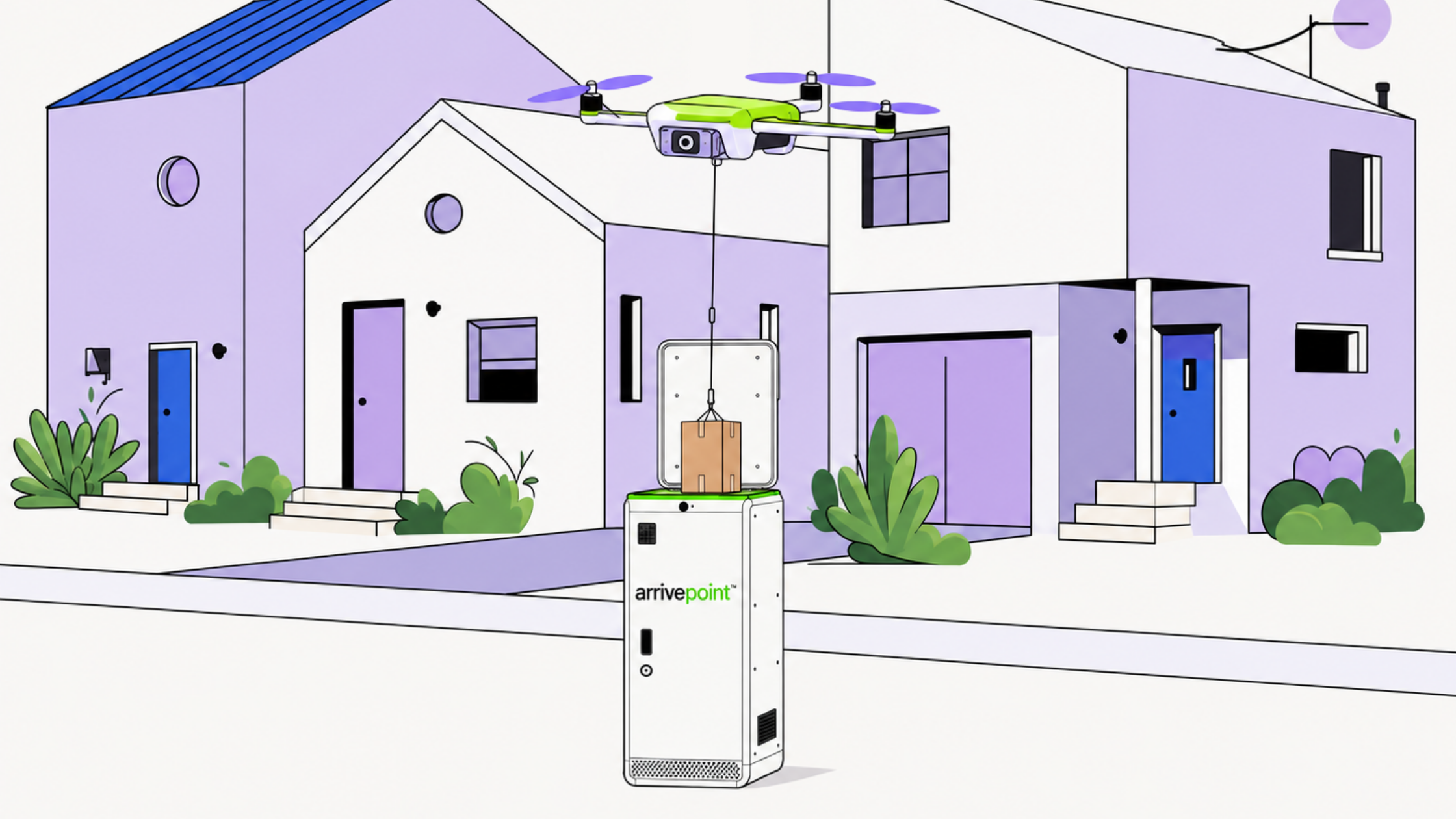
That creates a different kind of delivery experience.
Instead of asking: "Will you be home when the delivery arrives?" The system can work more like: "Your delivery is here. Pick it up when you're ready."
That's a small change in the handoff, but a significant change in how delivery can fit into everyday life.
There is another reason this infrastructure matters.
The future of delivery is unlikely to belong to just one type of machine.
Some deliveries may arrive by robot. Others may arrive by drone. Others may still be handled by a human courier or another type of vehicle.
If every system requires its own infrastructure, the delivery network becomes fragmented.
Different machines need different endpoints. Different providers need different equipment. And customers have to adapt to whichever system happens to be making the delivery.
A smarter approach is to create infrastructure that can support different delivery methods.
That's the thinking behind Arrive Points™.
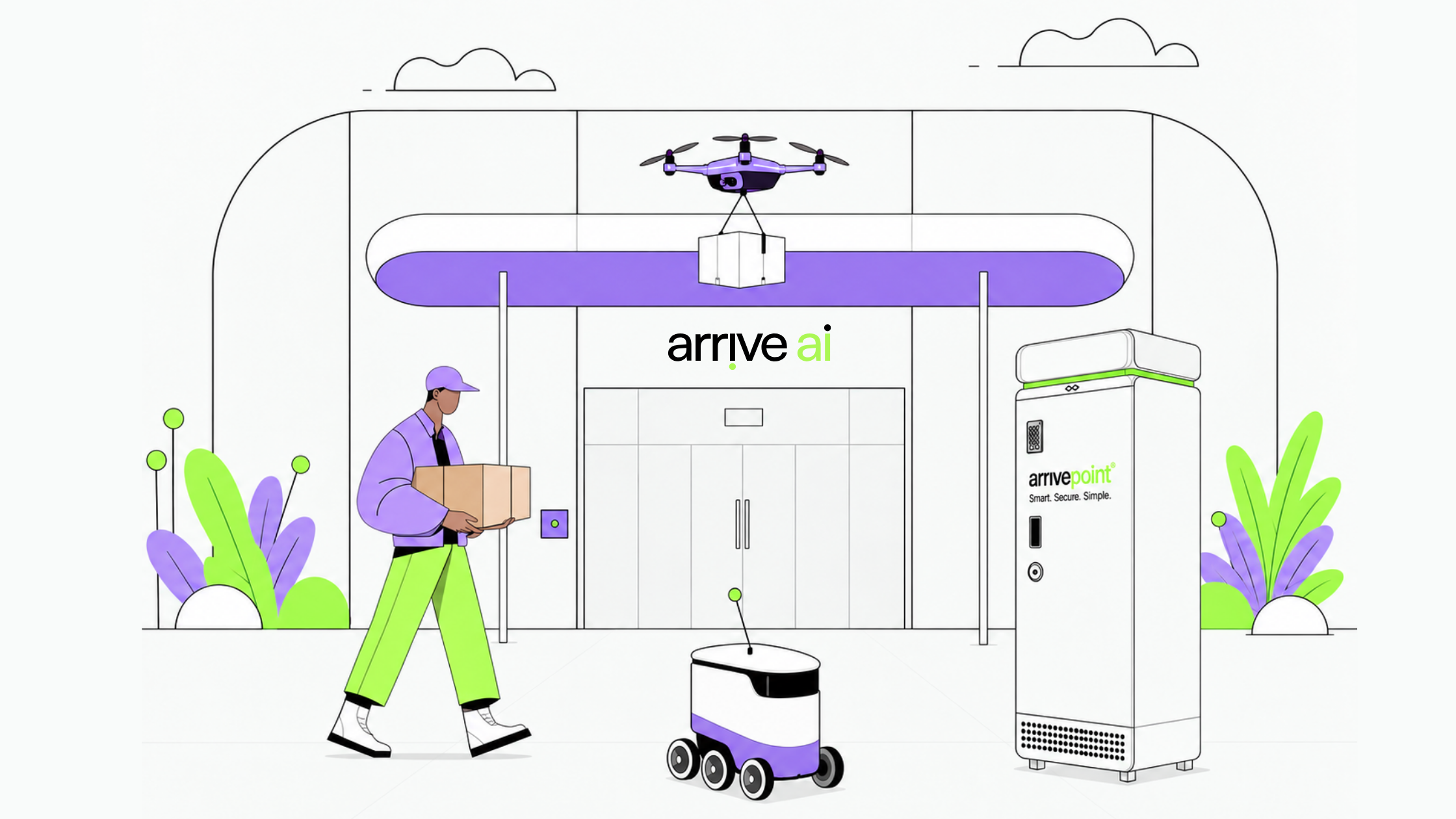
The goal isn't to create a box that belongs to one robot or one delivery provider. It's to create a connected physical endpoint that different delivery systems can use.
That interoperability becomes increasingly important as the delivery ecosystem expands.
Once a secure delivery endpoint is connected to the broader delivery system, it becomes more than a place to leave a package.
It becomes part of the network.
An Arrive Point™ can support delivery and retrieval while providing the infrastructure needed to complete the exchange securely.
And the concept isn't limited to one configuration.
Different environments can require different approaches. A delivery point might be positioned at a curb, integrated into a building, or designed for another type of location.
The form can change. The purpose remains the same: create a reliable place for goods to move between the delivery network and the recipient.
That opens the door to more than just unattended package delivery. It can support returns and reverse logistics. It can serve commercial environments. And as more delivery systems emerge, the same underlying infrastructure can help connect them to the places where goods ultimately need to go.
The biggest promise of smart delivery isn't simply that a robot can move a package without a driver.
It's that delivery can become less disruptive.
Today, receiving a package can still mean planning around a delivery window. You may need to be home. You may need to listen for the doorbell. You may worry about whether the package will be left outside.
A more connected delivery system changes that relationship.
The infrastructure can receive the delivery even when you aren't there. You don't have to stop what you're doing. You don't have to coordinate your schedule with a robot, drone, or courier.
The delivery can happen on its own schedule. And you can retrieve it on yours.
That's what makes the experience smarter.
Robots and drones will continue to improve.
They'll become better at navigating, carrying goods, and completing deliveries.
But smarter machines alone don't solve every problem.
The infrastructure around them has to evolve too.
A delivery network needs places where goods can be securely exchanged. It needs systems that can connect different delivery methods. And it needs to account for the simple reality that people aren't always waiting at the door.
That's where the next stage of smart delivery takes shape.
Not just in the machine. Not just in the software. But in the infrastructure that connects the two to the real world.
Smart delivery shouldn't have to wait for you.
It should work around you.
Go deeper into the infrastructure behind smart delivery, the asynchronous problem, and why secure, connected delivery endpoints can become an important part of a future where robots, drones, and other delivery systems work together.
Listen to it here: https://www.thelogisticsoflogistics.com/the-infrastructure-autonomous-delivery-needs-with-dan-otoole/