Why medical drone delivery needs an infrastructure standard, not just better aircraft.
A new whitepaper on medical drone delivery is making the rounds, and it gets something most people in this industry miss.
Everyone is focused on the drone.
How fast it flies, how far it can go, whether it can carry a blood sample or a vaccine or a prescription without the package shifting in flight. The aircraft is the easy part to talk about because it is the part you can see.
What you cannot see is what happens at the other end. A drone lands at a hospital ward at 2 a.m. A prescription arrives at a patient's front door when they are at work. A lab sample reaches its destination and sits in a compartment with no one authorized to retrieve it.
That moment, when the package arrives and the system does not know what to do next, is where medical drone delivery breaks down. And it is where almost no one in this industry has focused serious attention.
"The drone getting the package from A to B is the easy part. What happens at the endpoint is where the whole system breaks down."
AeroX published a whitepaper called "Securing the Sky: A Chain of Custody Framework for Medical Drone Delivery in the United States." It is one of the first serious attempts to address what I think of as the last-inch problem, and it gets something fundamentally right: the handoff matters more than the flight.
The paper maps the regulatory landscape for medical drone delivery and finds a problem that should concern everyone in this space. At least seven federal and state agencies touch a single drone delivery of a prescription medication. The FAA governs the aircraft. The FDA governs the drug. The DEA governs controlled substances. State pharmacy boards govern dispensing. HIPAA governs patient data. The FCC governs communication links.
Nobody governs the seams between them.
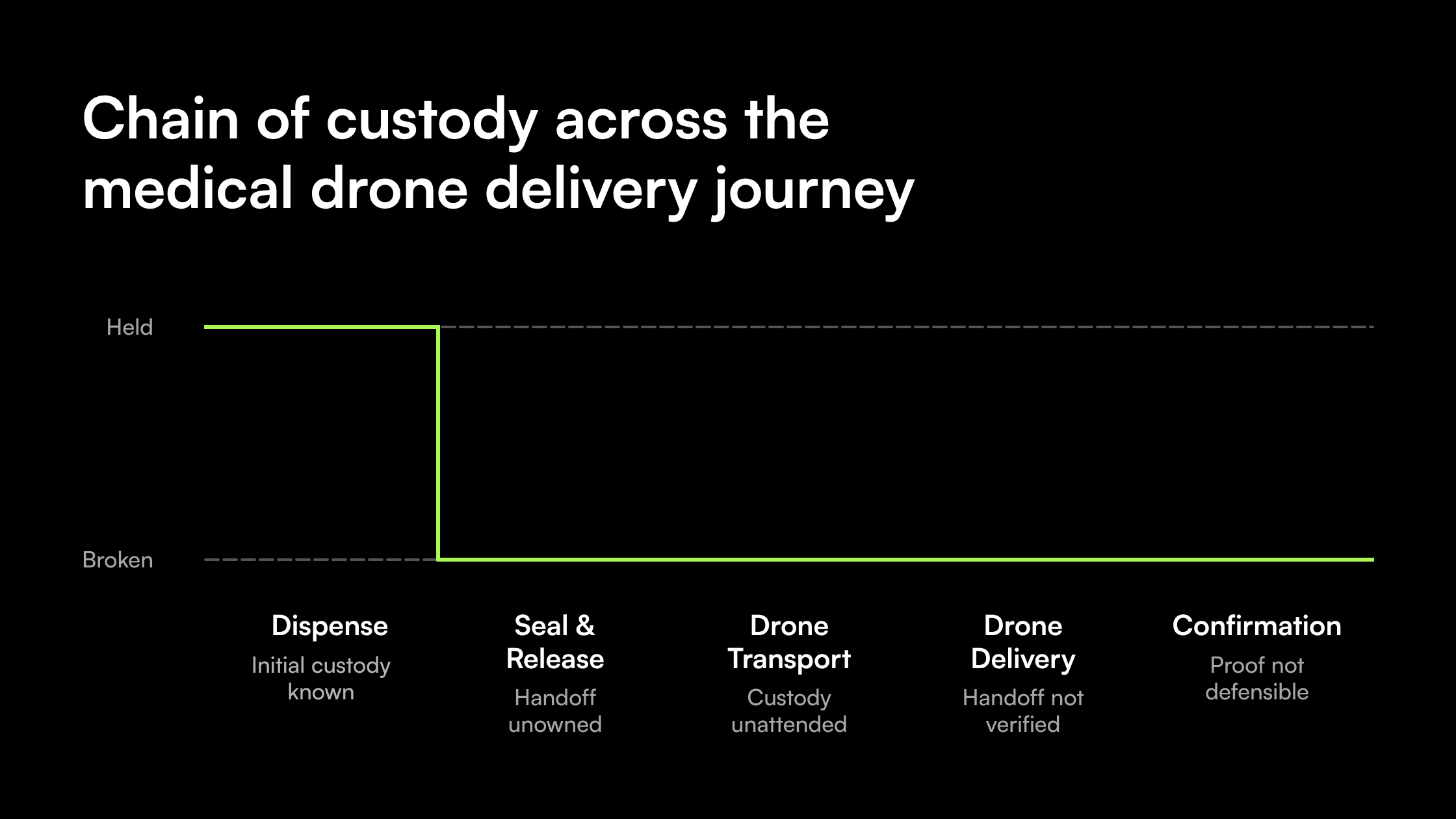
The moments where a pharmacy hands a package to a drone, where a drone delivers to a patient, where telemetry data crosses from operational to clinical, those moments are unregulated. And that is not a technical problem. It is an infrastructure problem.
At Arrive AI, we have approached this from the ground up. Literally.
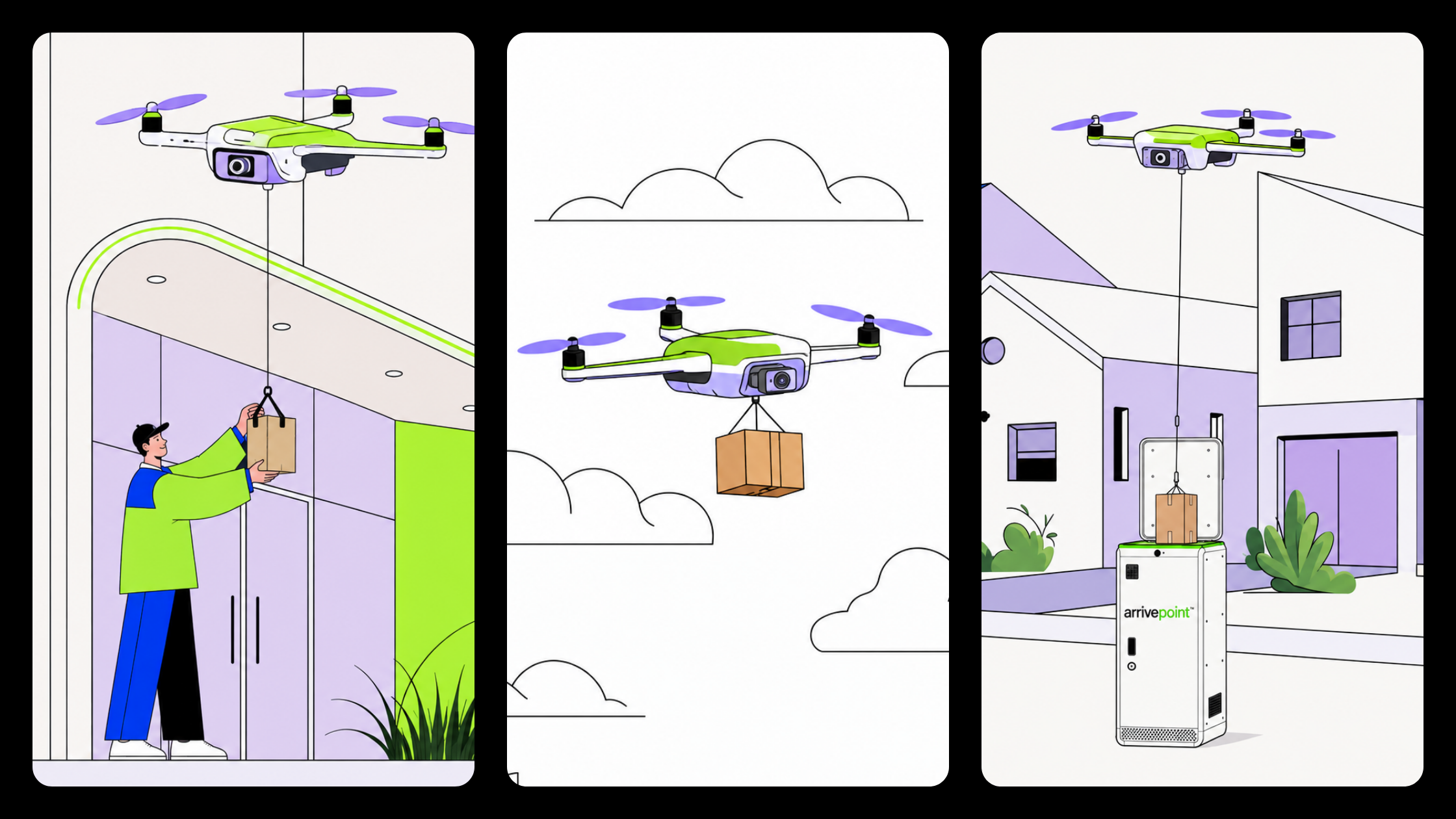
Our Arrive Points are secure delivery endpoints installed at hospitals, pharmacies, and facilities. When a robot or drone delivers to an Arrive Point, the package goes into a controlled environment with authenticated access, continuous condition monitoring, and a documented chain of custody from that moment forward.
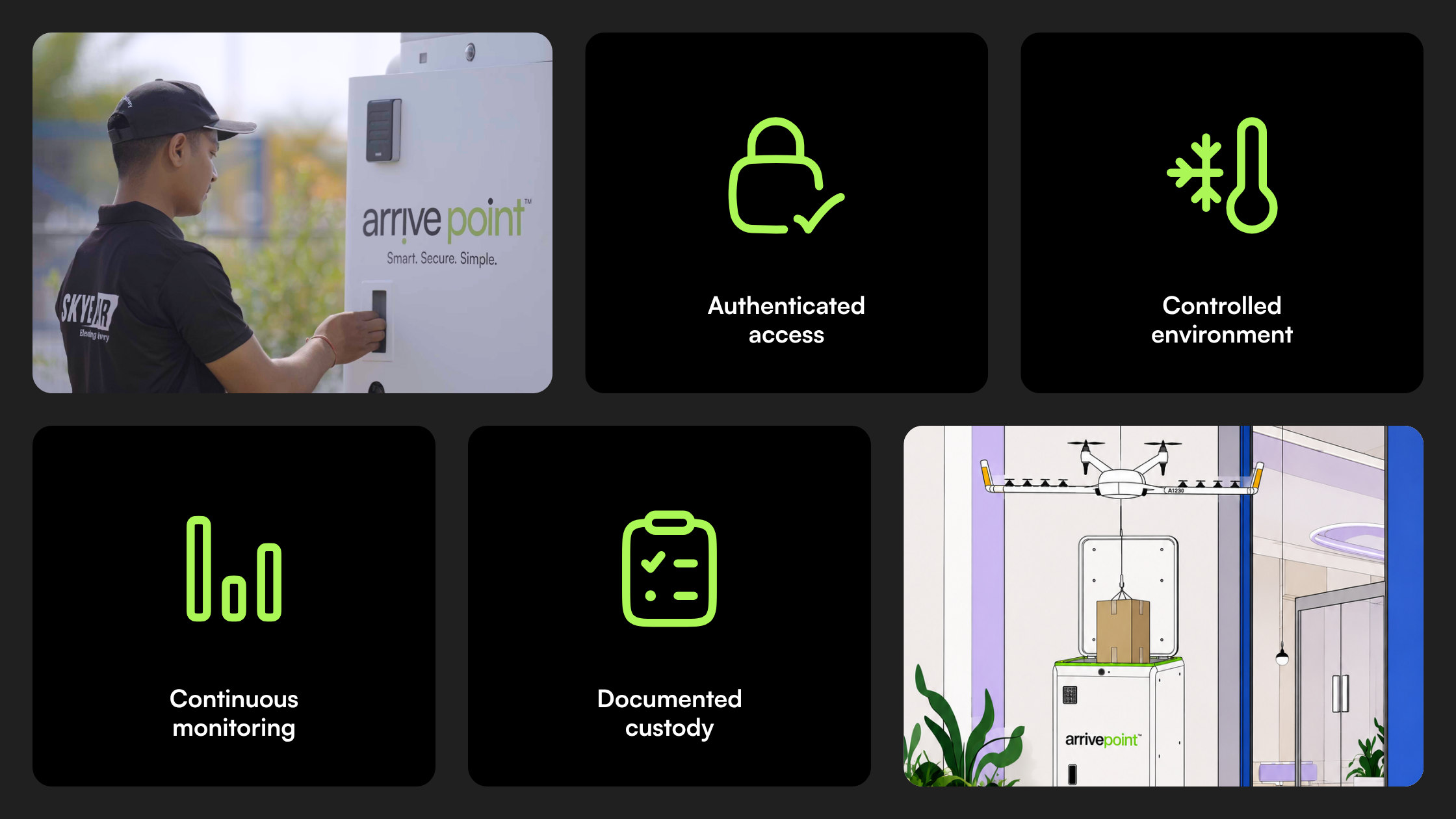
The drone does not wait. The patient does not have to be home. And if something goes wrong, there is a complete record of what happened, when it happened, and who was responsible at every step.
The AeroX framework describes Arrive Points as solving the "nobody home" problem. We are glad to be part of the conversation. More importantly, we think it points to where the whole industry needs to go.
The medical drone delivery market is growing fast. The AeroX paper cites the global market at $294 million today, projected to reach $2.5 billion by 2034.
At least eight U.S. companies now hold FAA Part 135 air carrier certificates for commercial drone delivery, following DoorDash's certification in July 2026. Zipline alone has signed drone delivery agreements with health systems including Mayo Clinic and Cleveland Clinic to bring medications and supplies directly to patients.
But a drone that can fly long distances in minutes is only as good as the endpoint waiting for it.
Healthcare systems evaluating drone delivery need to know that the delivery is as accountable as any other link in the clinical supply chain. Hospital pharmacy directors, compliance officers, and risk managers are not asking whether the drone can fly. They are asking who owns the package when something goes wrong.
Without a clear answer to that question, this industry will not scale in healthcare settings. Not because the technology failed. Because the system around it was not built to the standard the healthcare world requires.
AeroX is calling on regulators, healthcare institutions, and drone operators to build an interoperable, standardized chain-of-custody framework. I agree with that call. And I think the companies that will win in this space are the ones building the infrastructure layer now, before regulators require it, before a high-profile failure makes it urgent.
The sky is not the hard part. The last inch is.
Read the full AeroX whitepaper here: https://ncaerox.com/wp-content/uploads/2026/09/AeroX_ChainOfCustody_Whitepaper_Final.pdf
Dan O'Toole is the Founder, Chairman, and CEO of Arrive AI (NASDAQ: ARAI), a physical AI and autonomous logistics infrastructure company based in Fishers, Indiana.
Learn more about Arrive AI's infrastructure for medical delivery at Arrive AI - Autonomous Healthcare Delivery