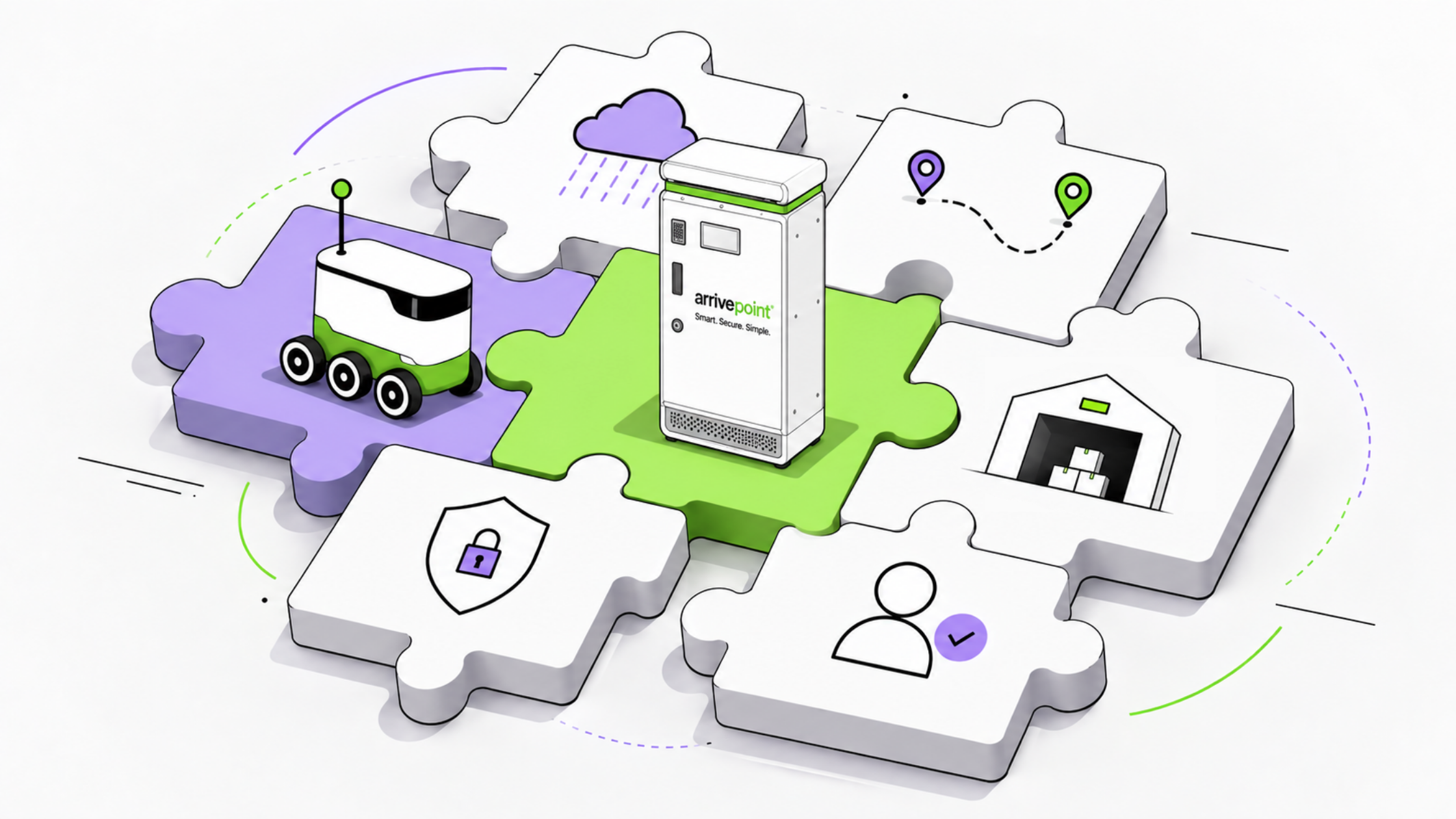
When people think about physical AI, they picture the machines.
Robots. Drones. Autonomous vehicles.
These technologies are becoming more capable and moving into real-world environments beyond controlled warehouses and facilities.
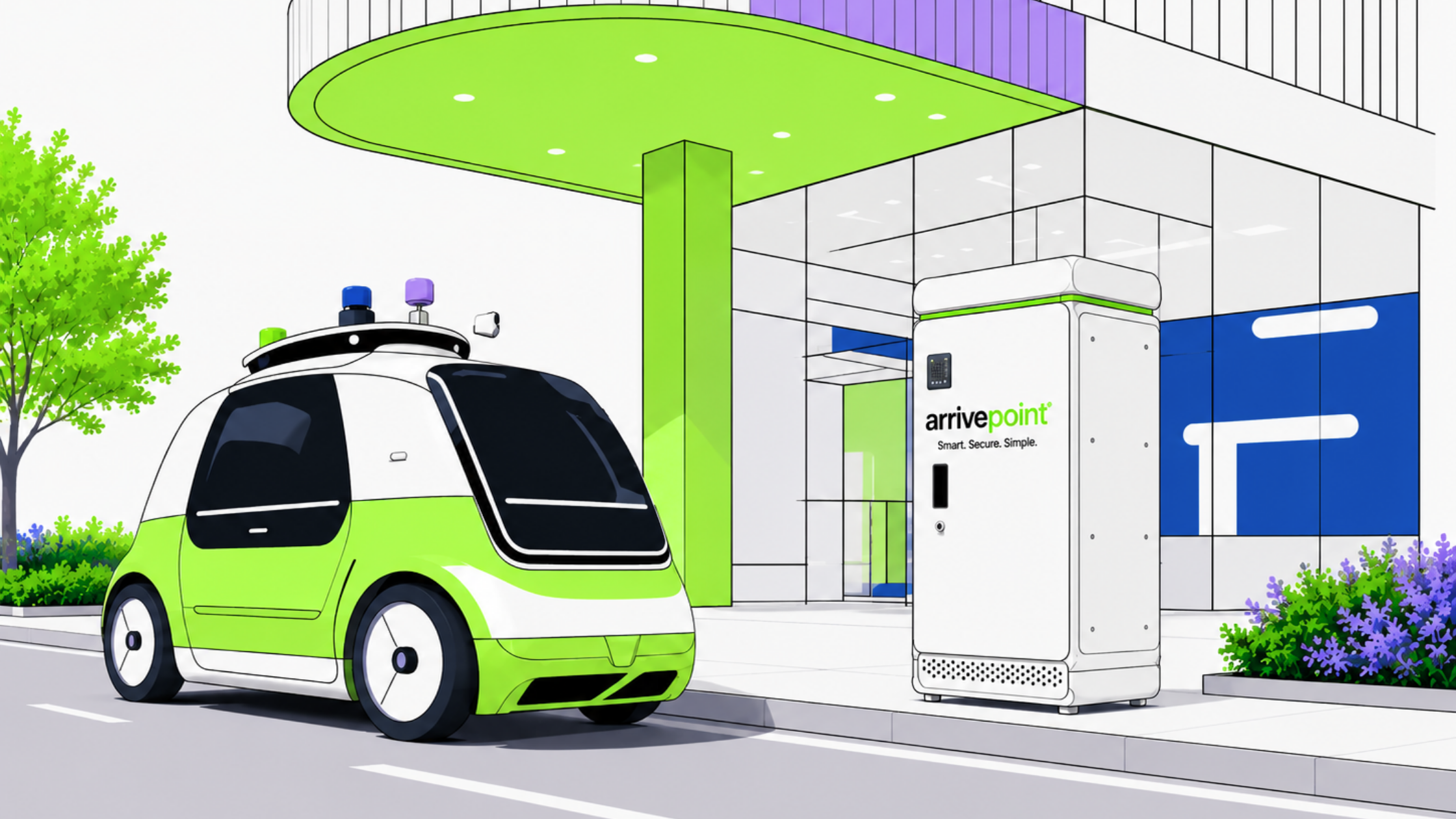
But getting a machine to move autonomously is only part of the challenge.
For autonomous delivery to work at scale, the infrastructure around those machines has to work too.
A robot can navigate to a destination.
But what happens when it gets there and nobody is available to receive the package?
That's where the limitations of a machine-only approach become clear.
The robot may be autonomous, but if a person still has to be there for every handoff, the overall delivery isn't truly autonomous.
The missing piece is infrastructure that allows the delivery to continue without someone managing every step.
For autonomous delivery to scale, the handoff between the machine and the recipient has to be just as reliable as the journey itself.
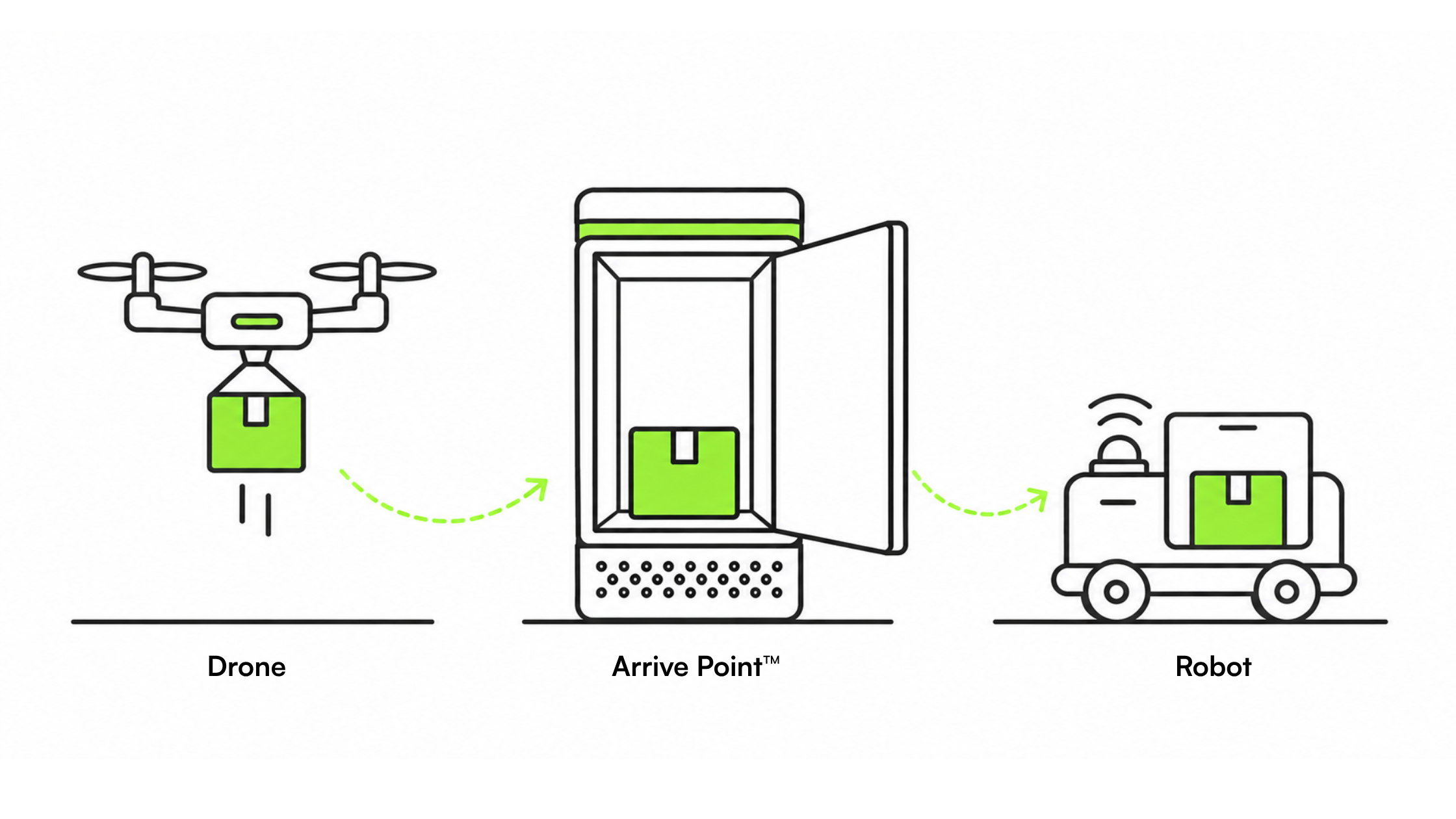
Arrive Points™ provide a secure endpoint where autonomous systems can complete deliveries and packages can be retrieved when the recipient is ready.
That means a robot doesn't have to wait for a person to arrive.
The delivery can happen independently, reducing the human involvement required at each handoff.
This is one of the ideas at the center of Arrive AI's work with robotics partners such as Ottonomy Inc. Combining smart robots with Arrive Points™ can help address the human-in-the-loop problem that remains in many delivery workflows.
The opportunity goes beyond any single robot.
Different environments will require different autonomous systems. Ground robots may handle one type of delivery, while drones or other autonomous vehicles handle another.
The infrastructure needs to support that variety.
That's why Arrive AI is focused on building endpoints that can work across different autonomous systems rather than being tied to one particular machine.
The goal isn't to build a network around one robot.
It's to build infrastructure that different robots, drones, and delivery systems can use.
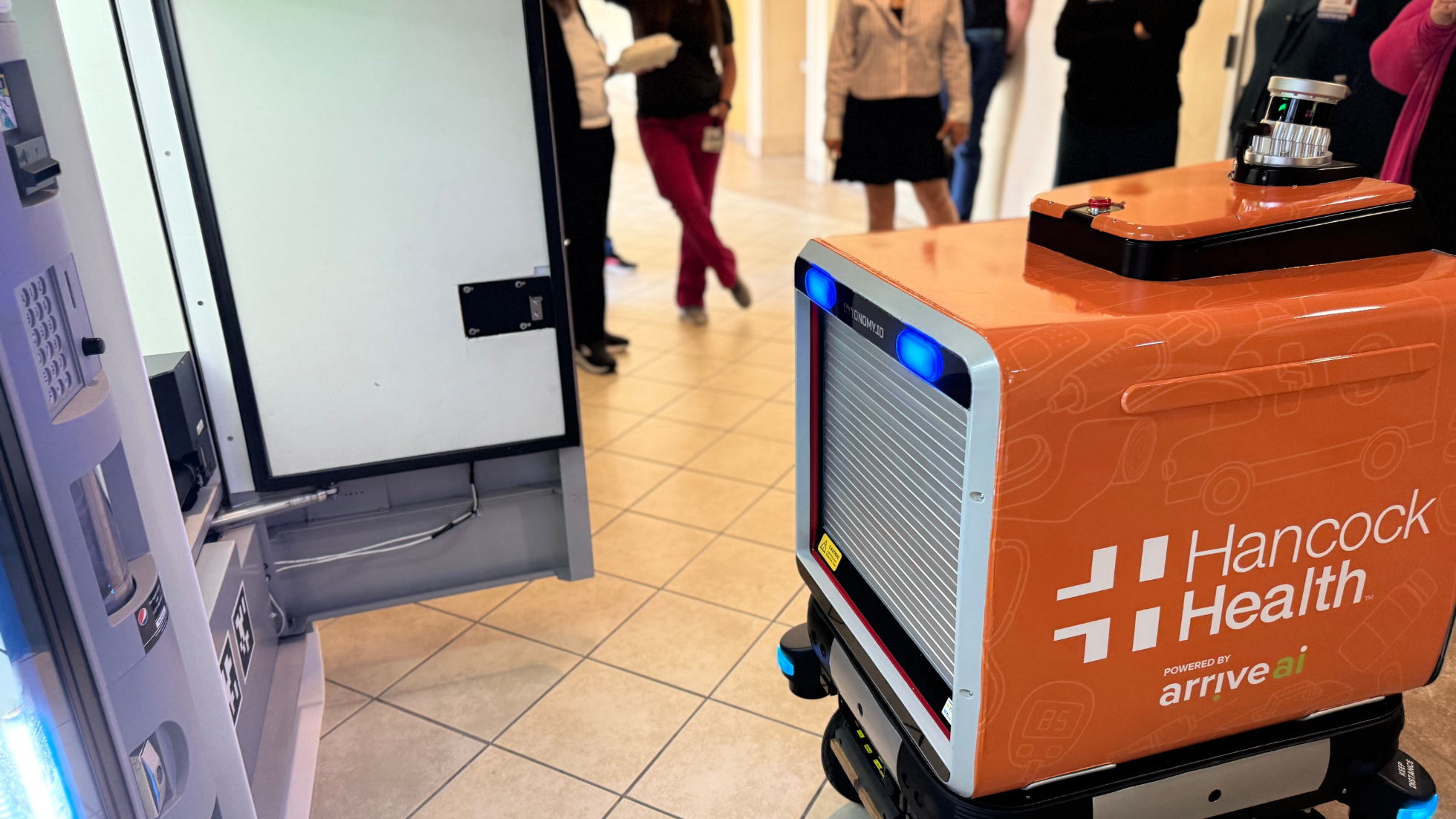
Healthcare provides a clear example of why this matters.
At Hancock Regional Hospital, Arrive Points™ and Ottonomy's robots work together as part of an end-to-end delivery system. Combining smart robots with Arrive Points™ can help reduce the human involvement that remains in many delivery workflows.
And the opportunity extends beyond healthcare.
As autonomous systems move into more real-world environments, they need reliable infrastructure to complete deliveries, support secure handoffs, and connect different parts of the logistics process.
That makes infrastructure an important part of moving autonomous delivery from individual deployments toward scalable networks.
Physical AI will continue to evolve.
The machines will become more capable, and new types of autonomous systems will emerge.
The infrastructure needs to be ready for that evolution.
Whether the delivery comes from a ground robot, a drone, or another autonomous system, there still needs to be a reliable place for the package to go.
That's why the future of smart delivery isn't just about building smarter machines.
It's about building the infrastructure that allows those machines to work together.
The machines may be what people see.
But the infrastructure is what allows the system to work.
Go deeper into the partnership between Arrive AI and Ottonomy Inc., why infrastructure is critical to scaling autonomous delivery, and how combining robots with Arrive Points™ can create more seamless delivery workflows across healthcare and industrial environments.
Watch it here: https://www.youtube.com/watch?v=8Cb2pAFsCBE
Subscribe to The Dan Show on YouTube to stay current as new developments happen at Arrive AI.