Where do good engineering ideas actually come from?
Most people picture a whiteboard, a conference room, or a long night at a desk. Those moments matter. But when we sat down with Attila Nagy, one of our mechanical engineers, and asked where his best ideas come from, his answer wasn't a meeting room.
It was mountain biking.
Attila has over 30 patents. Most of them, he told us, came to him on a bike trail, not at his desk. At first that sounds like a coincidence. Talk to him for five minutes, and it stops sounding like one.
When you're fully focused on the trail in front of you, your mind is still working on everything else in the background. That's often when a stuck problem finally loosens up. Some of those trail ideas turned into real patents. Others became fixes for products we ship today.
A common assumption about engineering is that ideas only show up while you're actively grinding on a problem. That's not what we've seen. Minds keep working on a hard problem long after you've walked away from your desk.
A bike ride, a walk, a break, any of it can create the distance a problem needs to come loose. The real skill isn't forcing the idea to show up on schedule. It's noticing it when it does and writing it down before it's gone.
Having a good idea is one thing. Getting it built is another.
In a big company, a good idea can sit in approval meetings for months. Our engineering team is small enough that an idea can go from a conversation to a test to a fix in the same week. That speed adds up. Teams that can test something and learn from it fast end up improving faster than teams stuck waiting on sign-off.
Attila's team is currently on iteration 27 of our next-generation product. Not version two. Not version five. Twenty-seven.
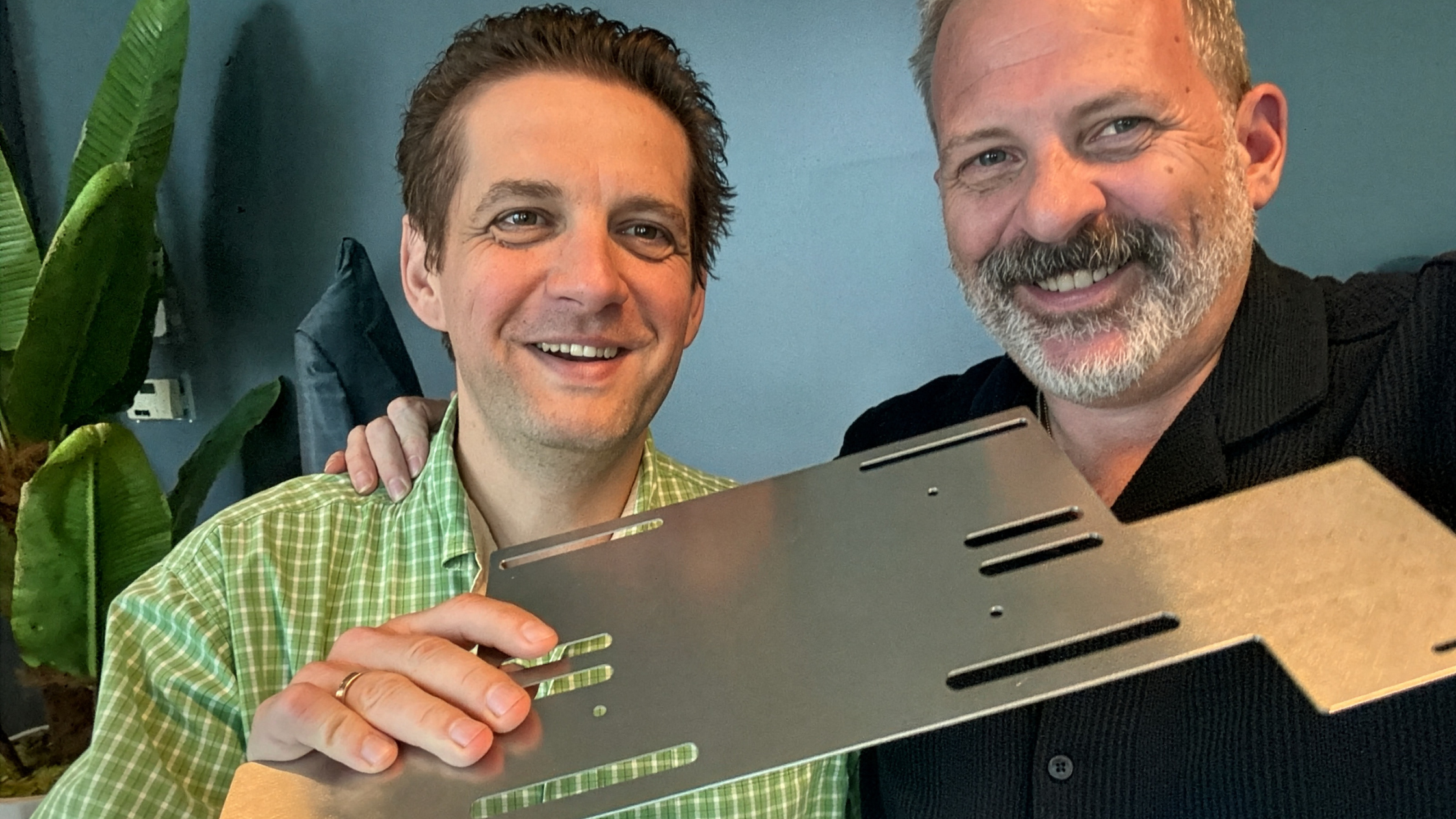
Each version taught the team something the last one couldn't. Build it, test it, break it, fix it, repeat. That's not a failure to get it right the first time. That's how the thing actually gets built right.
Attila had a comparison we haven't stopped thinking about: engineering is like running an ice cream shop. You don't stop at one flavor. You keep making new ones until you find the ones people actually want.
The same is true for a product. Building something technically impressive isn't the goal if it doesn't make someone's day easier. That's the test every idea has to pass before it's worth shipping.
It's easy to get caught up in talking about AI, robotics, and automation as if the technology alone is the story. It isn't. Behind every one of those breakthroughs is a person who stayed curious enough to try the same idea 27 different ways until it worked.
Sometimes the best engineering doesn't happen at a desk. Sometimes it happens on a trail, with nobody watching, and shows up as a fix nobody expected.
Go deeper into how the Arrive AI engineering team thinks, builds, tests, and iterates, including where some of the best ideas come from when you're not sitting at a desk.
Watch it here: The Dan Show - One Year on NASDAQ: Engineering, Strategy & What's Next
Subscribe to The Dan Show on YouTube to stay current as new developments happen at Arrive AI.